

Lake info · Fish of the Big O
Lake Okeechobee Fish Species
Lake Okeechobee is famous for Florida bass, but it is home to many more fish. Here are 31 you can see or catch, from crappie and bluegill to catfish, gar, bowfin, nonnative tilapia and clown knifefish, with how to tell them apart and what the FWC rules say.
Book a trip
Pick a trip, town and length to see live dates with the best available guide.
Prefer to talk? Call (863) 777-9848Sport fish our guides target
These four are what most anglers come for. Every trip is 4, 6 or 8 hours with all tackle furnished.
- Sport fish 4
- Other sunfish 4
- Catfish and bullheads 4
- Gar and bowfin 4
- Nonnative fish 7
- Baitfish and forage 3
- Rare visitors 5

Largemouth, bigmouth
Florida bass
- Best
- Winter into spring, December to April, for the biggest fish. Good all year.
- How
- Live wild shiners, or flipping soft plastics and frogs into the grass.
- Limit
- 5 a day per angler, only 1 may be 16″ or longer (FWC).

Speckled perch, speck
Crappie
- Best
- Late fall to early spring, before the spawn in January, February and March.
- How
- Minnows and small jigs on 4 to 6-pound line.
- Limit
- 25 a day per angler, 10-inch minimum on Okeechobee (FWC).

Bream
Bluegill
- Best
- April to June, around the spawning beds.
- How
- Crickets, worms and beetle spins. Fly fishing is a lot of fun too.
- Limit
- Part of the 50 panfish a day, combined (FWC).

Redear sunfish
Shellcracker
- Best
- Spring into summer. They spawn by April; fish the days around the full moon.
- How
- Worms on the bottom near the beds.
- Limit
- Part of the 50 panfish a day, combined (FWC).
Bag limits from the Florida Fish and Wildlife Conservation Commission. See all limits.
More fish in Lake Okeechobee
The rest of the lake’s fish, grouped by type. Tap a group above to jump to it.
Other sunfish
Smaller sunfish that turn up on panfish trips, mostly around shoreline cover.

Goggle-eye
Warmouth
A big-mouthed, red-eyed sunfish with dark lines running back from the eye. It lives in thick cover and hits worms and small lures.
Rules: Panfish limit
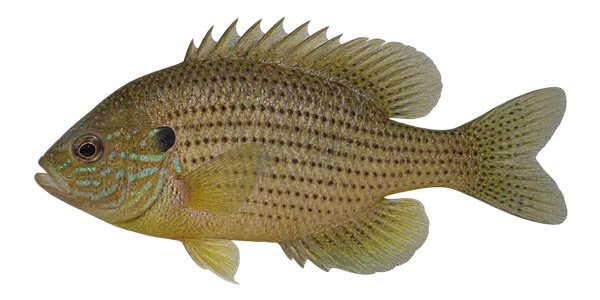
Stumpknocker
Spotted sunfish
A small, dark-spotted sunfish that hangs around stumps, roots and shoreline cover.
Rules: Panfish limit
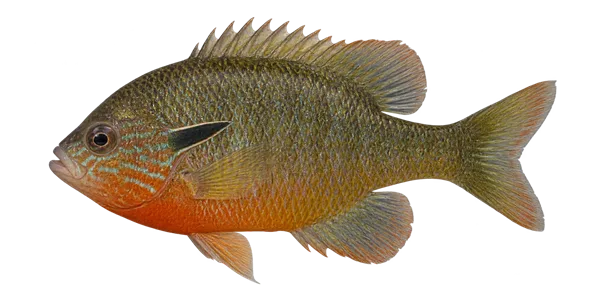
Robin
Redbreast sunfish
Males have an orange-red belly and a long, dark ear flap. More common in rivers and canals than in the open lake.
Rules: Panfish limit
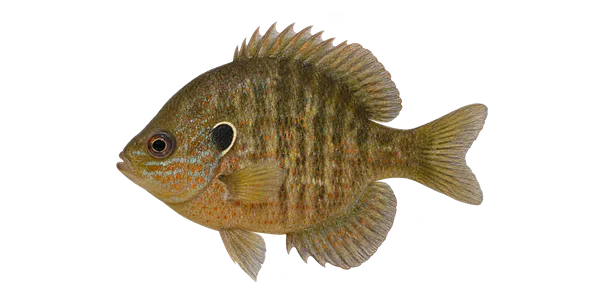
Small sunfish
Dollar sunfish
A small, colorful sunfish with wavy blue-green lines on the cheek. Rarely more than a few inches long.
Rules: Nongame, no bag limit
Catfish and bullheads
Bottom feeders that bite cut bait, worms and shrimp, often at night and in the canals.
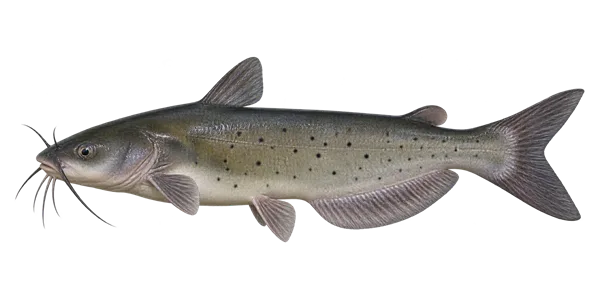
Channel cat
Channel catfish
Forked tail and a gray-blue body, with dark spots on younger fish. Read about a 10-pound Okeechobee channel cat.
Rules: No bag limit
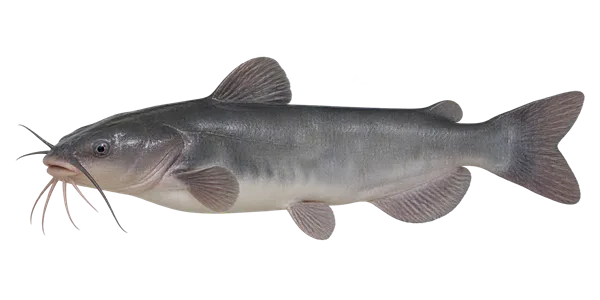
White cat
White catfish
Forked tail like a channel cat, but with a broader head and a whiter belly.
Rules: No bag limit
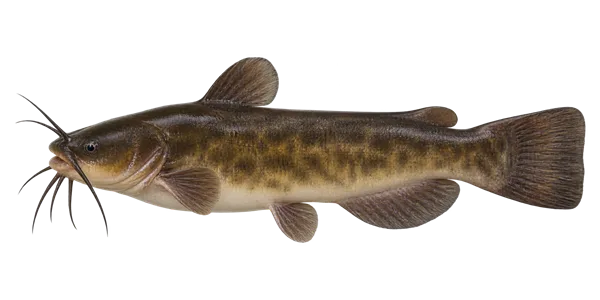
Bullhead
Brown bullhead
A square-tailed, mottled brown catfish that likes shallow, weedy water.
Rules: No bag limit

Bullhead
Yellow bullhead
A square-tailed bullhead with white or yellow chin barbels.
Rules: No bag limit
Gar, bowfin and pickerel
Toothy, old-school predators that often grab a bass bait and put up a hard fight.
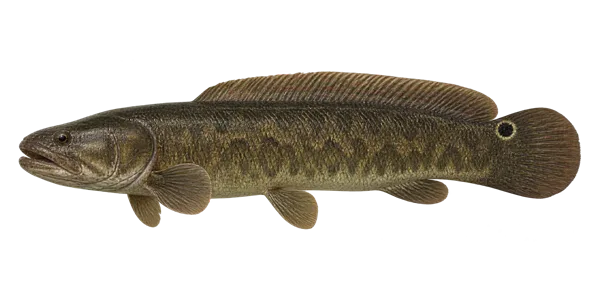
Mudfish, grinnel
Bowfin
A long dorsal fin down the back and, on males, a dark spot near the tail. Can breathe air in warm, low-oxygen water.
Rules: No bag limit

Spotted gar
Florida gar
A short snout and dark spots all over. Common in the grass and canals, often seen rolling at the surface.
Rules: No bag limit

Needlenose
Longnose gar
A long, thin snout full of teeth. Grows larger than the Florida gar.
Rules: No bag limit

Jackfish
Chain pickerel
A chain-link pattern on its sides and a mouth full of teeth. Ambushes baits along the edges of the grass.
Rules: No bag limit
Nonnative fish
Fish from other continents that now live in South Florida waters. Keep all you want, but never move them to another lake.

Tilapia
Blue tilapia
The most common tilapia around the lake. Builds round nests on shallow sand flats.
Rules: No bag limit

Tilapia
Nile tilapia
A tilapia from Africa that looks a lot like the blue tilapia, with dark vertical bars on the tail.
Rules: No bag limit

Tilapia
Spotted tilapia
Dark vertical bars and spots on a light body. Common in South Florida canals.
Rules: No bag limit

Atomic sunfish
Mayan cichlid
A red-orange throat and a dark spot near the tail. Hard-fighting, and good to eat.
Rules: No bag limit
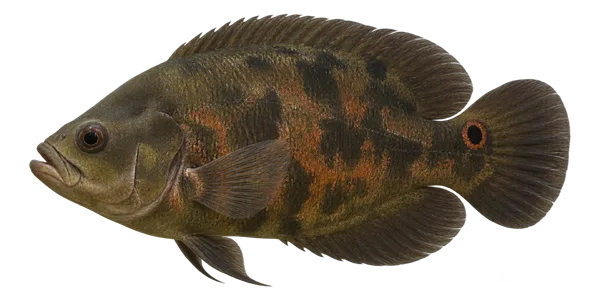
Oscar
Oscar
An orange-ringed eyespot on the tail. A South Florida canal fish that bites worms and small lures.
Rules: No bag limit

Featherback
Clown knifefish
A silver, knife-shaped fish from Southeast Asia with a row of white-ringed black spots and a long, rippling bottom fin. The north end of the lake near the Kissimmee River is loaded with them. Can grow over 3 feet, gulps air and jumps when hooked.
Rules: No bag limit

Armored catfish
Brown hoplo
An armored catfish that gulps air to live in shallow, low-oxygen water.
Rules: No bag limit
Baitfish and forage
The small fish that feed the big ones. Find the bait and you find the bass and crappie.

Wild shiner
Golden shiner
The bait behind many of the lake’s trophy bass. Our guides fish wild shiners on live bait trips.
Rules: Bait
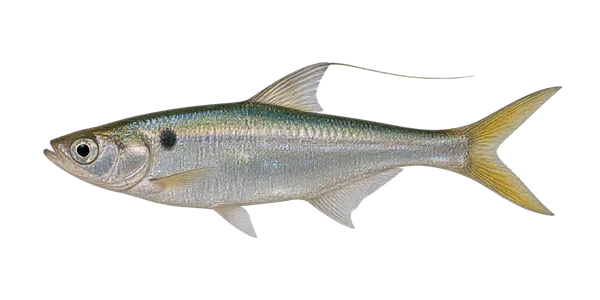
Shad
Threadfin shad
A small silver baitfish that schools in open water. Crappie follow the shad schools.
Rules: Bait
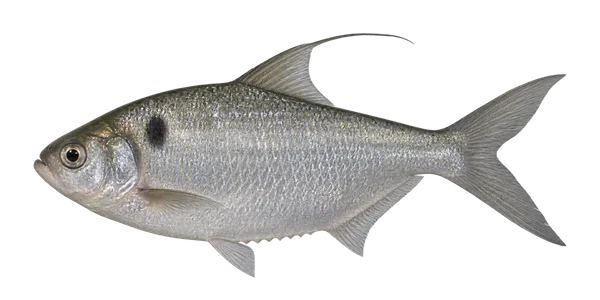
Shad
Gizzard shad
A larger shad with a long, thread-like last ray on the back fin. Forage for bass and catfish.
Rules: Bait
Rare visitors and uncommon catches
Fish you might hear about but seldom catch on the lake.
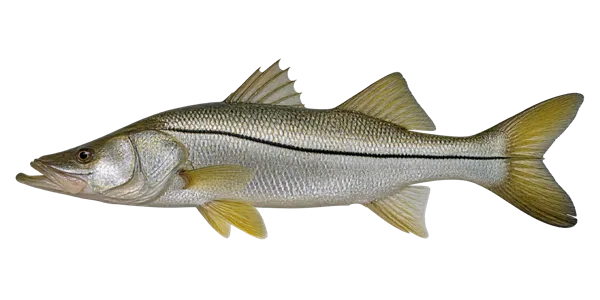
Linesider
Common snook
A saltwater fish that can reach the lake through the river locks. Rare on Okeechobee. FWC saltwater rules apply.
Rules: Saltwater rules

Silver king
Tarpon
Another saltwater fish that can reach the lake through the locks. Rare, and catch-and-release under FWC rules.
Rules: Saltwater rules

Mullet
Striped mullet
Schools in the lake and canals and is usually caught with a cast net, not a hook. A freshwater license covers mullet taken from fresh water.
Rules: FWC mullet rules
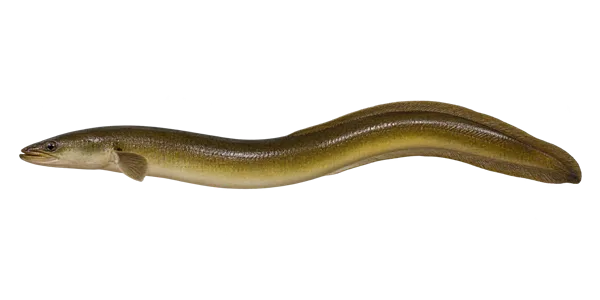
Eel
American eel
A long, snake-like fish that lives in fresh water and swims to the ocean to spawn. Rarely caught.
Rules: Nongame
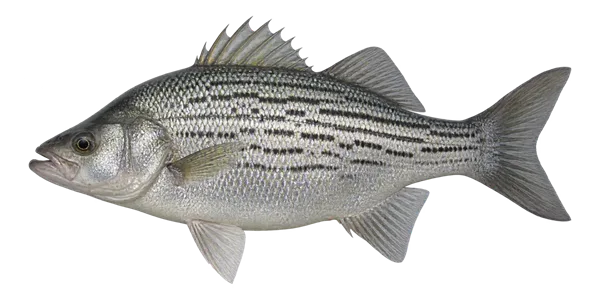
Hybrid striper
Sunshine bass
A cross of striped bass and white bass that the FWC stocks in some Florida waters. Uncommon here.
Rules: 20 a day with striped and white bass, only 6 may be 24″+
Rules from the Florida Fish and Wildlife Conservation Commission (FWC). Rules can change; always check FWC before you fish. Lake Okeechobee fish limits · Fishing records · Fishing license
Lake Okeechobee fish questions
What fish are in Lake Okeechobee?
Florida largemouth bass, black crappie (speckled perch), bluegill and redear sunfish (shellcracker) are the main sport fish. The lake also holds warmouth and other sunfish, channel and white catfish, bullheads, bowfin, Florida and longnose gar, chain pickerel, nonnative fish such as blue tilapia, Mayan cichlids and clown knifefish, and baitfish such as golden shiners and shad.
What is the best fish to catch in Lake Okeechobee?
Florida largemouth bass. Lake Okeechobee is famous for big bass: anglers routinely catch 5 to 10-pound bass, and the lake record is 15 pounds 5 ounces. In winter and spring, crappie are a close second.
Are there catfish in Lake Okeechobee?
Yes. Channel catfish, white catfish and brown and yellow bullheads all live in the lake and its canals. Catfish are nongame fish in Florida, so there is no statewide bag limit.
Are there clown knifefish in Lake Okeechobee?
Yes. Clown knifefish, a nonnative fish from Southeast Asia, now live in Lake Okeechobee, and the north end of the lake near the Kissimmee River is loaded with them. They are silver with a row of white-ringed black spots and can grow over 3 feet long. In Florida they are nongame fish with no bag limit; never release one into other waters.
Are there peacock bass in Lake Okeechobee?
Butterfly peacock bass live in the canals and lakes of southeast Florida, but they do not handle cold water well and are rarely caught in Lake Okeechobee itself. On Okeechobee, Florida largemouth bass are the main target.
Do I need a fishing license to fish Lake Okeechobee?
Anglers 16 and older need a Florida freshwater fishing license unless they are exempt. Our Florida fishing license page explains the options.
Can I book a trip for crappie and panfish?
Yes. We run bass trips and crappie and panfish trips of 4, 6 or 8 hours from $350 for 2 anglers, with all tackle furnished. Pick the trip, town and length in the booking card to see live dates.
Come catch a few of them
Tell us what you want to catch and we will match you with the right guide, town and date.


